Hamnet
Director: Chloé Zhao
2025
7 December 2025
See
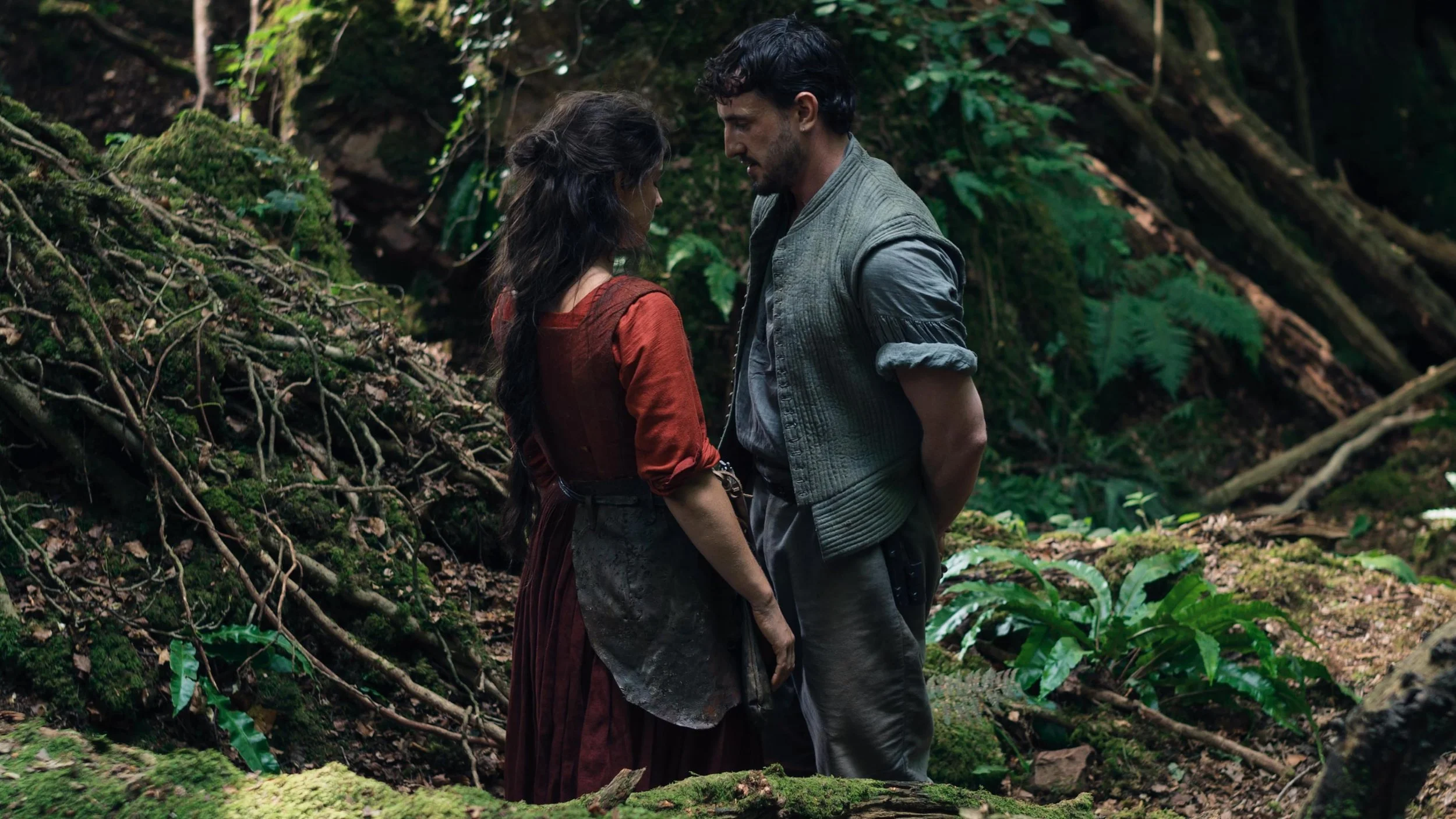
William Shakespeare (Paul Mescal) meets Agnes Hathaway (Jessie Buckley) in the English countryside near Birmingham, and is enchanted by her witchy ways in the woods. She keeps a hawk, is knowledgeable about plants and natural medicines like mugwort. She falls pregnant. Her brother Bartholomew (Joe Alwyn) is supportive. Her step mother, his father and mother Mary (Emily Watson) are not thinking she enchanted him (the real Hathaway was pregnant at 26 when Shakespeare was 18). Though the latter comes around in one of the few original monologues in this film, mostly its shows more than tells, observing people wordlessly and in nature, ala Terrence Malick.
Think
The primeval rituals of Agnes are shown through repeated folklore, incantations like spells, it’s heart warming how she and her brother repeat what their mother taught them, and Agnes rests her head on Batholomew’s shoulder as they walk together. Eventually she leans on Will for support and they’re hand-fasted (engaged). Their first interactions convey a chemistry in all its intensity, like scenes of how they make love on a table, or him circling her and proposing. Zhao shows beautiful close ups of these two actors, they’re as believable as the real people she got to play fictional versions of themselves in her earlier films The Rider and Nomadland. But since she left that style behind for the Marvel Cinematic Universe something of her initial allure has been lost once Hollywood got to her. As Justin Chang wrote in The New Yorker, “It marks an unstable new mode for Zhao, a weave of subdued pastoral realism and forceful, sometimes pushy emotionalism. The movie whispers poetic sublimities in your ear one minute and tosses its prestige ambitions in your face the next.”
Granted it would be pretty hard to get the real people to play themselves 400 years later. Balancing the publication’s critique with reporting, in an interview on The New Yorker Radio Hour, Zhao shared intruiging insights like describing her Director of Photography, Łukasz Żal, coming up with depicting the depths of a cave beneath a giant tree in the forest and looking down at the cavity as a literal pitfall looming that the characters will face. Juxtaposed with the aspirational heights of what they aspire to, symbolised by the kestrel soaring above them. Then there’s the komorabi, light filtering through leaves in between. Żal previously shot Zone of Interest, and was nominated for Cinematography Oscars for Cold War and Ida. Zone of Interest’s night vision scenes were a jarring choice, as was Sandra Huller’s performance in that film being celebrated at the Academy Awards over Anatomy of a Fall. But for this film Żal frames an oppressive lens when the characters are stuck at home, but the pastoral scenes are much more cinematic in their scope when characters are outdoors and free.
Feel
Hamnet has been described as trauma porn, because it shows the tragedy of Will and Agnes having children and losing their son Hamnet. The exposition of their emotions are on full display, with Irish actors Buckley and Mescal, usually more restrained, holding nothing back this time and leaving little to the imagination, including Hamnet’s death scene making as uncomfortable viewing on screen as witnessing it and being helpless in real life. Agnes has flashbacks of her own mother dying in childbirth and being ushered away and not allowed to grieve. This time when she is bereft and alone her grief is vocal, while Will is away in London working with his theatre troop at The Globe, he’s muted. Except for a forgettable ‘To be or not to be’. They part ways because she cannot see how he suffered, until hearing of his latest play she comes to see Hamlet with her brother. At first she’s incredulous, until she gets it in an example of art therapy. Coincidentally this can be best seen in a post-apocalyptic HBO miniseries Station Eleven, a COVID-19 pandemic production, and contained another Hamlet interpretation for its finale. Both star David Wilmot, who plays John, Will’s father in Hamnet. The scene of Agnes and Bartholomew entertain The Globe gave me chills, remembering entering a pop up version myself to see A Midsummer Nights Dream several years ago. Much is made of Shakespeare’s timelessness as his plays have continued to run, be reinvented and find new relevance. Seeing them live is incredible, the players interact with the peanut gallery, and the performance washes over you and carries you away, if you let it and get it emotionally not intellectually. The same is true of Hamnet. Seeing Will plagued with self-doubt trying to write but stuck in a village with no outlet for what’s inside him, then later pace back and forth as he’s instructing a cast member on how to feel the dialogue not merely recite it and deliver the lines himself with pathos was a demonstration of show, don’t tell. The tenderness of Agnes teaching her children a ritual for farewelling her hawk when it died touched my heart. As did the poignant little moments of Hamnet and Will shaking goodbye to each other repeatedly as the Bard left for London once more. The boy wanted to be an actor to work alongside his father, the performances the children; Hamnet (Jacobi Jupe) and Judith (Olivia Lynes), and eldest sister Susanna (Bodhi Rae Breathnach) put on in the yard were adorable. Ultimately, there’s the catharsis of the final performance and Agnes and the crown reaching out to Hamlet scored to Max Richter’s On the nature of Daylight which deeply moved me, just as it did in Arrival.